


Last Updated: 8/19/26
MLS laser therapy is a non-invasive treatment that uses focused light to reduce pain and inflammation and support the body’s natural healing. At Urgent Orthopaedic Care in North Hollywood and Los Angeles, Dr. Vlad Gendelman uses it to help patients recover from tendonitis, arthritis, and soft tissue injuries, often as an alternative to more invasive options.
What Is Cold Laser / MLS Therapy?
Cold laser therapy, also called low-level laser therapy, uses low-intensity light to stimulate cells without heating or damaging tissue. The word “cold” refers to the low power level, not the sensation: the treatment is painless and does not burn the skin.
MLS therapy, short for Multiwave Locked System, is an advanced form of cold laser therapy. Instead of a single wavelength, it combines two synchronized wavelengths of light, one that targets pain and one that targets inflammation and swelling. Delivering both together allows MLS therapy to address several parts of the healing process at once.
At Urgent Orthopaedic Care, MLS laser therapy is offered as a non-invasive option for pain and inflammation. MLS Laser Therapy uses specific wavelengths of light that have a strong anti-inflammatory, anti-edema effect on tissues that are exposed to the laser.
Conditions MLS Laser Therapy Treats
MLS laser therapy may help with a range of orthopedic and soft tissue conditions, particularly those involving inflammation, swelling, or slow-healing tissue. Common conditions treated at Urgent Orthopaedic Care include:
- Tendonitis, including Achilles tendonitis and tennis elbow
- Arthritis and joint inflammation
- Soft tissue injuries such as sprains, strains, and muscle tears
- Bursitis and other overuse injuries
- Post-surgical recovery, to support healing and reduce swelling
Because it is non-invasive and drug-free, MLS therapy is often used alongside other conservative treatments, such as physical rehabilitation and activity modification, as part of a broader treatment plan.
The Science of How MLS Laser Therapy Works
MLS laser therapy works at the cellular level. When the laser light reaches injured tissue, it is absorbed by the cells and stimulates the production of ATP, the energy that cells use to repair and regenerate. This has several effects that work together:
- Reduced inflammation and swelling in the treated area
- Improved circulation, which brings oxygen and nutrients to the injury
- Faster repair of tendons, ligaments, and muscle tissue
- Pain relief as inflammation and pressure on nerves decrease
In practical terms, photons of laser energy penetrate deeply into tissue and accelerate cellular reproduction and growth. As a result of exposure to the MLS Laser, the cells of tendons, ligaments and muscles repair themselves faster.
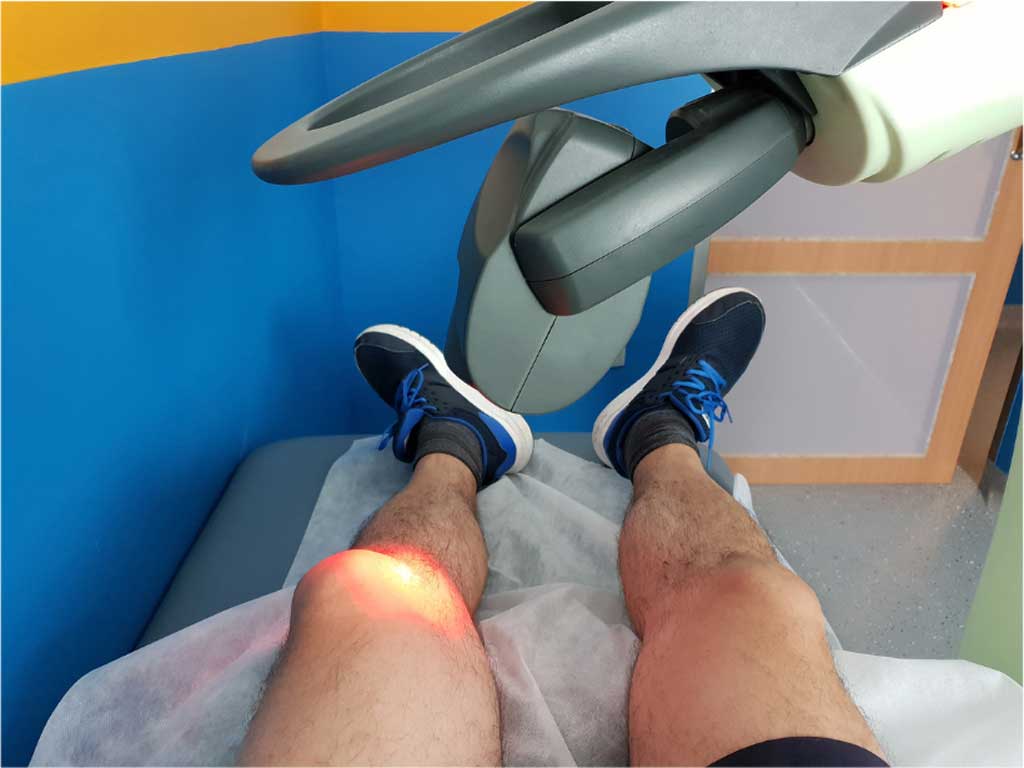
What to expect during a session: a typical MLS treatment takes about 10 to 20 minutes. A handheld device is moved over the treatment area, and most patients feel little more than a gentle warmth. There is no downtime afterward, so you can return to your day right away. The therapy is generally well tolerated with few reported side effects.
Recovery Timeline and Number of Sessions
The number of MLS laser therapy sessions depends on the condition being treated, how long it has been present, and how each patient responds. Acute injuries often need fewer sessions than long-standing or chronic conditions.
As a general guide, many patients begin to notice a difference within the first few sessions, and a full course commonly runs across several weeks with treatments scheduled a few times per week early on. Dr. Gendelman sets a specific plan after evaluating your injury, so the exact schedule is tailored to you rather than fixed in advance.
Because MLS therapy is non-invasive and requires no recovery time between sessions, most patients continue their normal activities throughout the treatment course.
MLS Laser Therapy in North Hollywood and Los Angeles, Dr. Gendelman’s Approach
At Urgent Orthopaedic Care, MLS laser therapy is part of a conservative, non-invasive approach to orthopedic care. Dr. Vlad Gendelman, the practice’s founder, is board-certified by the American Board of Orthopaedic Surgery and treats the full range of orthopedic problems across the body.
His approach is to start with the least invasive option that can effectively address a patient’s pain. For many musculoskeletal injuries, that means considering MLS laser therapy alongside treatments such as physical rehabilitation and injections before surgery is discussed. When a patient does need surgery, the same physician who evaluated them leads the case.
Patients can be seen at either the North Hollywood office on Riverside Drive or the Los Angeles office near Echo Park, with in-office imaging available at the time of evaluation to guide the treatment plan.
Frequently Asked Questions
Does cold laser therapy work?
Cold laser therapy has been studied for pain relief and tissue healing, and many patients experience reduced pain and inflammation, particularly for soft tissue injuries, tendonitis, and arthritis. Results vary from person to person and by condition, which is why Dr. Gendelman evaluates each patient to determine whether it is a good fit.
What does cold laser therapy do?
Cold laser therapy delivers low-intensity light into injured tissue, where it stimulates cellular energy production. This helps reduce inflammation and swelling, improve circulation, and speed the repair of tendons, ligaments, and muscles, which in turn reduces pain.
Does cold laser therapy help with knee pain?
Cold laser therapy may help with certain causes of knee pain, especially those involving inflammation, arthritis, or soft tissue injury. It is often used as a non-surgical option to manage symptoms, though some knee conditions, such as a complete ligament tear or advanced arthritis, may require additional treatment. An evaluation is the best way to know whether it can help your knee pain.
How much does MLS laser therapy cost?
The cost of MLS laser therapy depends on the condition being treated and the number of sessions in your plan, since treatment is typically delivered as a course rather than a single visit. Coverage varies by insurance. The clearest way to understand cost for your situation is to schedule a consultation, where the team can review your plan and any applicable coverage.