


Reverse Shoulder Replacement Explained: Who Needs It and Why

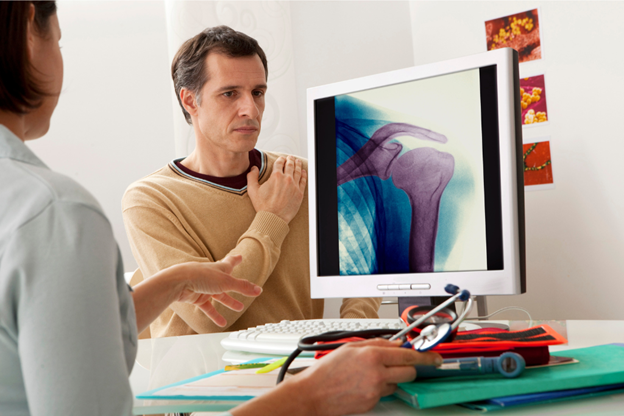
Lifting a coffee cup or reaching for a top shelf can feel impossible when arthritis and a torn rotator cuff work against each other. Things that used to be simple, like combing your hair or pulling a shirt over your head, can turn into daily battles. Many patients have been told their torn tendons are too damaged to repair. Some have tried injections, physical therapy, or even had a previous surgery with no lasting relief. News like that might feel like hitting a dead end, but it’s usually not.
Reverse total shoulder arthroplasty is a surgery that switches the position of the ball and socket in the shoulder joint. This design allows the deltoid muscle to take on a greater role in lifting the arm when the rotator cuff can no longer provide adequate function. It is commonly considered for complex shoulder conditions in which a conventional shoulder replacement or rotator cuff repair may not provide a predictable result.
If you have lived with shoulder pain for years and keep losing function, it helps to understand how reverse shoulder replacement works, who it is meant for, and what life looks like afterward.
Biomechanics 101: How Traditional vs. Reverse Shoulder Replacements Work
The shoulder is a ball-and-socket joint. The ball sits at the top of the humerus, and the socket is a shallow dish on the scapula. A healthy shoulder depends on four tendons called the rotator cuff. They keep the ball centered in the socket as the joint moves. At the same time, the deltoid muscle, which wraps over the top of the shoulder, does the heavy lifting once the ball is held in place.
A standard anatomic shoulder replacement generally depends on a functioning rotator cuff to help keep the joint centered and stable. When the rotator cuff is severely compromised, an anatomic replacement may not function as intended.
Reverse total shoulder arthroplasty flips this design. The metal ball, called a glenosphere, is attached to the shoulder blade side of the joint. A plastic cup is instead fixed to the upper arm bone. This is the opposite of normal shoulder anatomy, and that reversal is the whole point of the design. It removes the joint’s dependence on rotator cuff tendons that may no longer be able to do their job.
By changing the joint’s center of rotation, the reverse design allows the deltoid to contribute more effectively to raising the arm even when the rotator cuff is severely damaged. This altered biomechanics is one reason reverse shoulder replacement can restore useful function in appropriately selected patients with otherwise difficult-to-treat shoulder conditions.
Also Read: Joint Replacement vs. Physical Therapy: When Each Makes Sense
Who Needs a Reverse Shoulder Replacement? Primary Clinical Indications
Reverse shoulder replacement may be considered when severe rotator cuff dysfunction, advanced joint damage, complex fractures, or problems with a previous shoulder surgery make other treatment approaches less predictable.
- Rotator cuff tear arthropathy: This term describes severe, long-term arthritis paired with a massive rotator cuff tear that cannot be repaired. Over time, the upper arm bone can shift upward and rub against nearby bone, wearing down cartilage on both sides of the joint.
- Massive irreparable rotator cuff tears: Some patients lose the ability to raise the arm even without much arthritis. Doctors call this pseudoparalysis. The arm can’t lift because the torn tendons no longer carry force from muscle to bone.
- Failed prior shoulder surgeries or traditional replacements: Revision cases often involve bone loss, a loose implant, or soft tissue that has scarred and weakened. A reverse design can restore function even after a standard implant has already failed.
- Complex proximal humerus fractures in senior patients: Severe breaks near the top of the arm bone, especially in older adults with weaker bone, sometimes respond better to a reverse replacement than to fracture repair alone.
Age alone does not determine candidacy. Surgeons also consider the type and severity of joint damage, rotator cuff function, bone quality, previous procedures, overall health, activity goals, and how significantly the shoulder is affecting daily life. What counts most is the balance among joint damage, tendon health, and the extent to which the shoulder limits daily activities such as dressing, cooking, or sleeping through the night.
Advanced Surgical Precision: 3D CT Planning and Custom Instrumentation
At Urgent Orthopaedic Care, planning begins before the day of surgery. A CT scan can be used to create a detailed 3D model of the patient’s shoulder, allowing the surgical team to evaluate bone anatomy and wear patterns and plan implant positioning based on the patient’s individual anatomy.
3D planning and patient-specific tools can provide additional information about implant size, positioning, and alignment before surgery. When appropriate, these technologies can support precise surgical planning and execution.
Also Read: Fractured Shoulder Joint: When Replacement Outperforms Repair
Recovery, Rehabilitation & Realistic Life After Reverse Shoulder Surgery
Recovery from reverse shoulder replacement follows a general timeline, but every patient is different in their pace. The arm is kept in a sling for the first 3 to 4 weeks to protect the joint as the soft tissue heals. During this time, patients are encouraged to move their fingers, wrist, and elbow. This helps keep the blood flowing and prevents stiffness in the rest of the arm.
Physical therapy usually begins with gentle passive motion, where the therapist moves the arm without assistance from the patient’s muscles. Over weeks, this progresses to active exercises, then independent strengthening. Special attention is paid to deltoid strength, since this muscle now does most of the lifting. According to the American Shoulder and Elbow Surgeons, a slow, guided course of therapy results in better long-term shoulder function.
Patients often notice progressive improvements in pain and function over the months following surgery, but the extent and timing of recovery vary. Some activities may become easier as strength and motion improve, while certain movements can remain limited even after successful surgery. Your surgeon and physical therapist can provide more individualized expectations based on your shoulder and procedure.
With implant technology, joint durability has also improved over time. In a large multicenter study, reverse shoulder arthroplasty demonstrated strong long-term durability, with 10-year survival rates of 91.0% for primary cases and 80.9% for revision cases; outcomes were especially good for massive cuff tears and failed cuff repairs, with 10-year survival rates exceeding 95%.
Also Read: Why Some Patients Need Reverse Shoulder Replacement Instead of Standard Replacement
Conclusion
Severe shoulder pain and loss of arm function need not be lifelong problems. This is true even if you’ve been told your rotator cuff tear can’t be repaired. Reverse total shoulder arthroplasty was developed for cases where many standard treatments fail. For appropriately selected patients with rotator cuff tear arthropathy, massive irreparable tears, failed prior shoulder surgery, or certain complex fractures, reverse shoulder replacement can provide an option for improving pain and function.
The next step starts with an accurate diagnosis and a surgical team that understands complex shoulder cases. Schedule a comprehensive evaluation with Urgent Orthopaedic Care to find out if reverse shoulder replacement is an option for you.
FAQs
What is the main difference between a traditional shoulder replacement and a reverse shoulder replacement?
A traditional anatomic replacement recreates the shoulder’s natural ball-and-socket arrangement and generally depends on a functioning rotator cuff. A reverse replacement switches the ball-and-socket orientation, allowing the deltoid muscle to play a greater role in raising the arm when the rotator cuff is severely compromised.
How long does it take to recover from reverse shoulder replacement surgery?
Recovery occurs gradually over several months. Sling use, physical therapy, strengthening, and return to activities vary based on the procedure, healing, shoulder condition, and surgeon’s rehabilitation protocol. Your surgical team can provide a more individualized recovery timeline.
Can I still play golf, tennis, or lift weights after a reverse shoulder replacement?
Many patients return to light, low-impact activities once fully healed and cleared by their surgeon. Higher-impact or repetitive overhead sports need to be discussed one-on-one, since safe activity levels depend on shoulder strength and bone quality.
How long does a reverse shoulder implant last?
Reverse shoulder implants are designed as long-term joint replacements, and many continue to function well for years. How long an implant lasts varies based on factors such as the reason for surgery, bone quality, activity level, overall health, and whether additional shoulder surgery is needed in the future.
How do I know if I am a candidate for reverse shoulder surgery at Urgent Orthopaedic Care?
Candidacy depends on things like how much the rotator cuff is torn, how severe the arthritis is, and any past shoulder surgeries. A full evaluation, including imaging and a physical exam, is needed to find out if reverse shoulder replacement fits your shoulder.